Moving to Vietnam From the US: 2026 Cost, Visa & Safety Guide
Americans are sleeping on Vietnam. Here is the case for the move.
Most Americans file Vietnam under one of two folders: a backpacker layover, or a war documentary. Almost nobody files it under "a place I could live better than I do right now, for a third of the cost." That is the misread. And it is exactly the kind of misread that keeps people paying a premium to live somewhere that no longer serves them.
Here is the honest case for Vietnam in 2026, with the parts most "move abroad" content skips: the visa catch, the real numbers, the safety question answered with data instead of vibes, the food, and the climate, which is the single thing people get most wrong.
Geography is leverage. Vietnam is one of the cleanest places left to pull that lever.
Vietnam visa for US citizens
The barrier most people imagine does not exist. As an American you get a 90-day e-visa, applied for entirely online at evisa.gov.vn, approved in roughly 3 to 7 business days. No embassy visit. Twenty-five dollars for single entry, fifty for multiple entry. Your passport needs six months of validity and two blank pages. That is the whole process.
Now the part the visa-service blogs bury: there is no long-stay or one-year visa for US passport holders. Ninety days is the ceiling, and as of 2026, in-country extensions are generally not being approved. So you do not "settle in" on a tourist visa. You run a loop.
The loop is simple, and it is the reason to get the multiple-entry version. You base yourself in Vietnam, and roughly every 90 days you take a cheap flight out (Bangkok, Phnom Penh, and Siem Reap are an hour or two away and dirt cheap), then re-enter on a fresh e-visa. Plenty of people treat this as a feature, not a bug. Vietnam becomes your home base and the rest of Southeast Asia becomes a weekend.
Be clear-eyed about it: if you want to plant permanent roots with zero border runs, Vietnam is not yet the country for that. If you want a low-cost, high-quality base for the next year while you figure out your life, the visa is not in your way.
Cost of living in Vietnam
This is the part that matters, so here is the real shape of it.
In the central coast cities, Da Nang and Hoi An, a comfortable single-person lifestyle runs about $1,000 to $1,500 a month, all in. If you live a little leaner without slumming it, you can land closer to $800 to $1,100, and still have a nice apartment, eat out daily, and keep a gym membership.
The line items, roughly:
- One-bedroom apartment, decent expat-friendly area: $300 to $500. A sea-view or luxury build runs $700 to $1,500.
- High-speed fiber internet: $10 to $20.
- Gym membership: $20 to $40.
- A doctor's visit: $10 to $20. Private health insurance: $50 to $150 depending on coverage.
Ho Chi Minh City runs higher than Da Nang, so $1,000 a month in Saigon buys a more modest life than the same number on the coast. For context, Da Nang generally comes in 30 to 50 percent cheaper than Bangkok and 20 to 30 percent cheaper than the Bali expat zones, with better roads and faster internet than either. That gap is closing, though. Da Nang is filling up with expats and remote workers fast, and prices are rising to meet the demand. It could edge past Saigon on cost sooner than people expect, which is one more reason the cheap window is something to use now, not sit on.
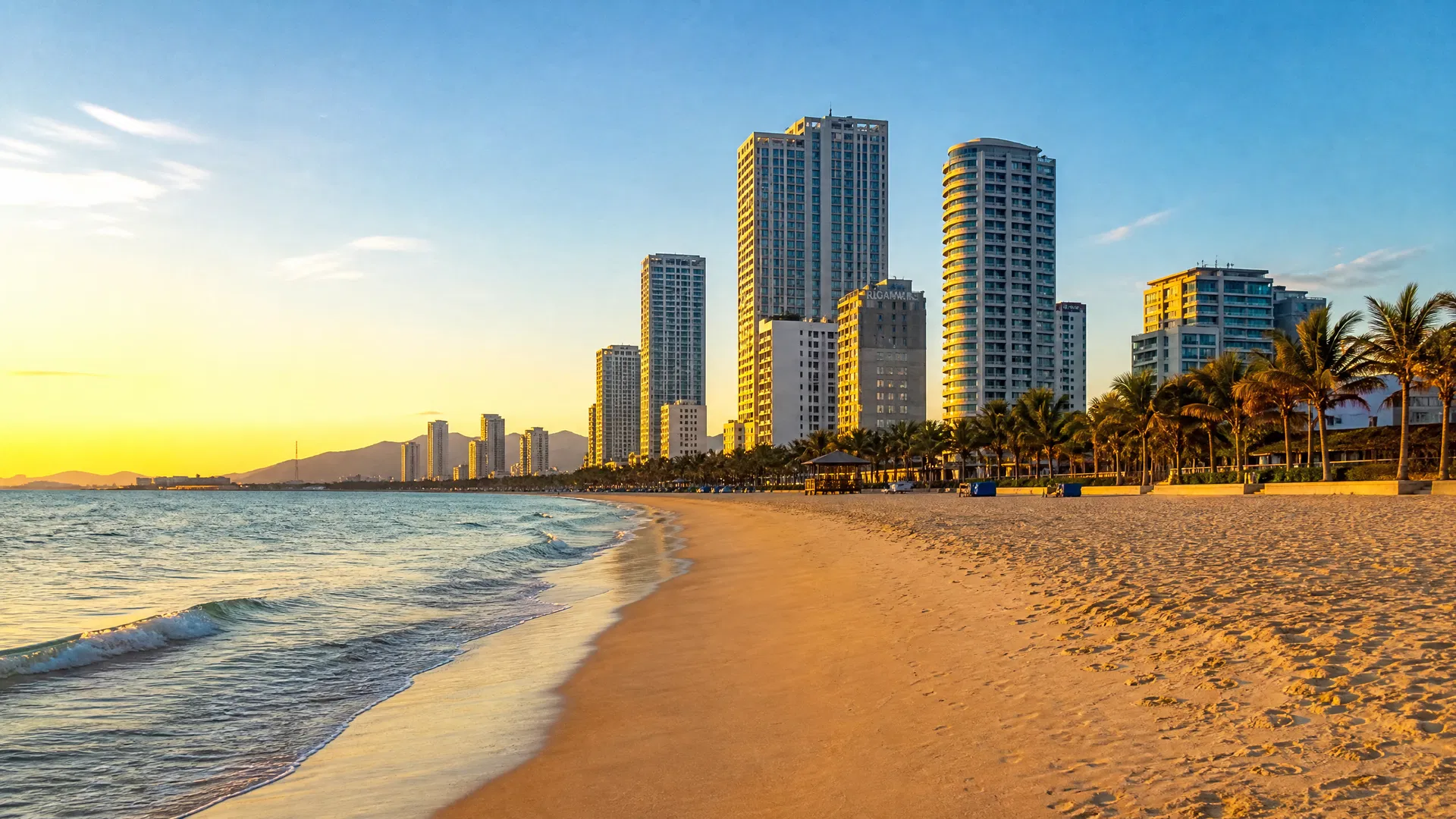
The point is not that Vietnam is cheap. The point is that your income stays the same while your cost of living drops and your quality of life climbs. The gap is yours. Save it, invest it, or spend it on a life that does not feel like a grind.
Is Vietnam safe for Americans?
Here is what the numbers actually say, because the fear in people's heads rarely matches them.
The US State Department rates Vietnam Level 1, "Exercise Normal Precautions." That is the lowest advisory tier, and it puts Vietnam a notch safer than France, Italy, Spain, the UK, and Germany, all of which now sit at Level 2, "Exercise Increased Caution." Read that again: by the State Department's own scale, Vietnam is a lower-risk destination than the postcard cities of Western Europe. Vietnam's homicide rate sits around 1.5 per 100,000 people. The United States runs roughly 6.3. You are statistically safer from violent crime in a Vietnamese city than in most large American ones.
Violent crime against foreigners is rare. The real risk is opportunistic and non-violent: phone and bag snatching, often by someone on a passing motorbike, in crowded areas. In Saigon, District 1 sees the most of it. The expat districts like Thao Dien are quieter. The central coast from Da Nang to Hoi An reports minimal issues.
The honest danger in Vietnam is not crime. It is traffic. The sea of motorbikes is real, and it is the thing that actually hurts foreigners. Practical defense is boring and effective: use a cross-body bag with the strap across your chest, do not stand at the curb scrolling your phone, take Grab instead of unmarked taxis, and respect the road. Do that and you have neutralized 90 percent of the risk.
Food and health in Vietnam
This is an underrated piece of the lifestyle upgrade, and it ties directly to health.
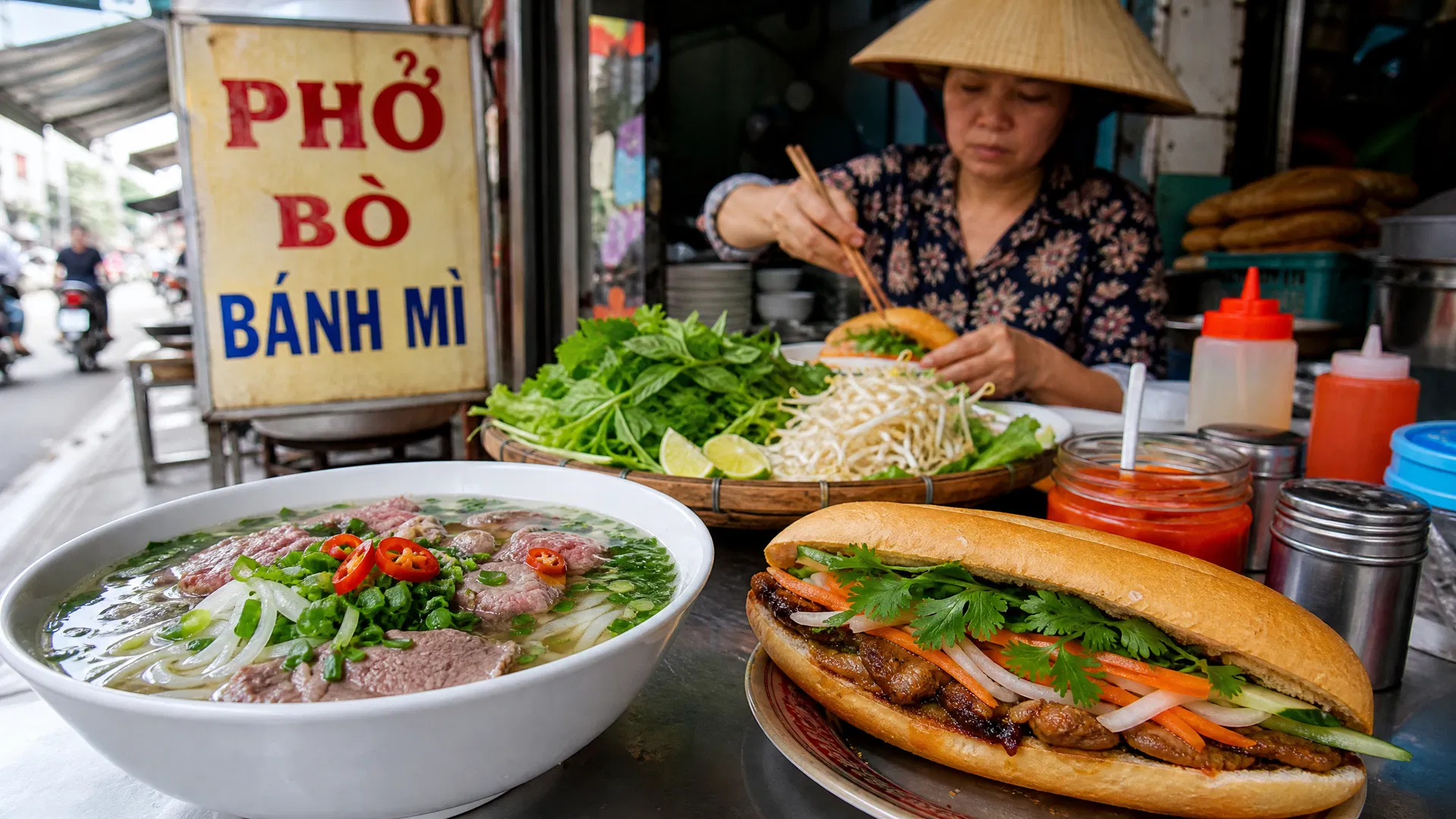
The default Vietnamese plate is built on whole ingredients: fresh herbs, vegetables, broth, rice, seafood, grilled meats. Far less of the processed, seed-oil-heavy, ultra-packaged stuff that quietly defines the American grocery run. Eating out is normal, social, and cheap enough that cooking is almost optional. A serious bowl of pho or a fresh banh mi costs a couple of dollars. Hygiene standards in the major cities have climbed sharply, with more internationally certified kitchens every year.
You will eat better and spend less. For a lot of people, the body changes within a couple of months without trying. That is not a wellness pitch, it is just what happens when the cheapest, most convenient food around you is also the least processed.
Vietnam climate by region
Most people treat Vietnam as one weather system. It is three, and once you understand that, the climate stops being a constraint and becomes a tool.
The country is long and narrow, so it splits into three distinct zones:
- North (Hanoi, Sapa, Halong Bay): Four real seasons. Winters are genuinely cool, January in Hanoi sits below 68°F (20°C) and Sapa gets frost in the mountains. Summers are hot, humid, and wet from roughly May to September. Pleasant windows: spring and autumn.
- Central coast (Da Nang, Hoi An, Hue): The beach belt. Hot and dry from February to August, with temperatures climbing into the high 90s°F (high 30s°C). Then the wall hits: September to December brings heavy rain, typhoons, and regular flooding in Hoi An. The sweet spot is February to May.
- South (Ho Chi Minh City, Mekong Delta, Phu Quoc): Tropical, two seasons only. Warm year-round, usually 77 to 95°F (25 to 35°C). Dry season runs about November to April. Rainy season, May to October, means a short, hard afternoon downpour most days, then it clears.
And then the mountains, which are their own product. Da Lat in the central highlands holds an average around 70°F (21°C) all year. People call it eternal spring. If you want a temperate climate without leaving the country, it is there.
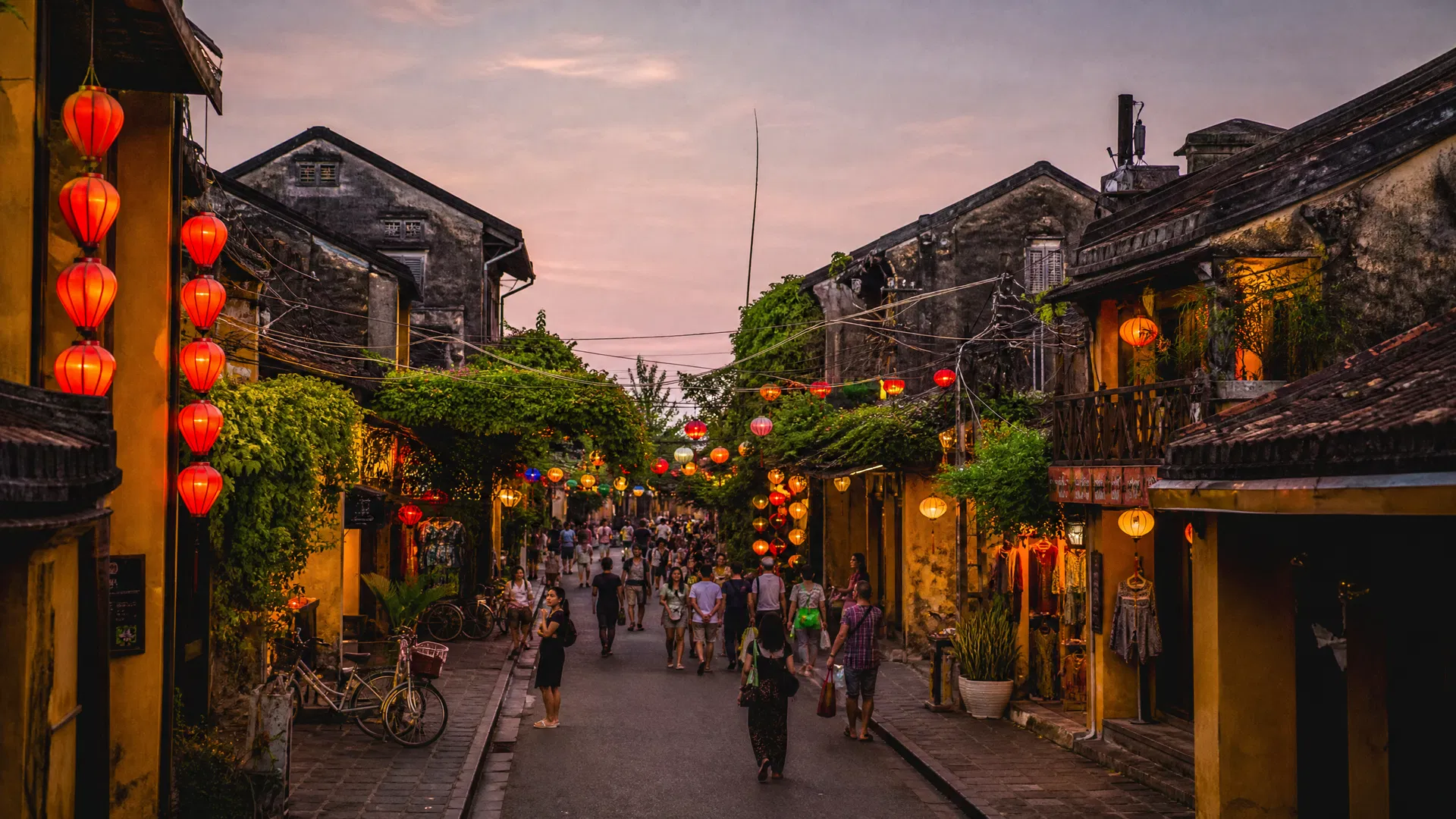
Here is the leverage. You do not have to endure a bad season. You relocate inside the country to stay in good weather. When the central coast goes underwater in October and November, the south is in its best stretch. When Saigon gets sticky in the wet months, the coast is dry and sunny. Coastal, urban, and mountain are three different lifestyles, and you can rotate between them on a 90-day visa cycle without ever leaving Vietnam. That is not a compromise. That is a menu.
This works best if you earn in dollars, can work remotely or are close to it, and you are tired of overpaying to live a life that has quietly gotten smaller. If that is you, Vietnam is one of the strongest arbitrage plays in Asia right now: the dollar stretches hard, the food upgrades your health by default, the streets are statistically safer than home, and you get to pick your climate by the season.
Moving to Vietnam FAQ
Do US citizens need a visa for Vietnam?
Yes. Americans need a visa to enter Vietnam. The simplest route is the 90-day e-visa, applied for online at evisa.gov.vn and approved in about 3 to 7 business days. It costs $25 for single entry or $50 for multiple entry. There is no long-stay visa for US passport holders, and in-country extensions are generally not approved in 2026, so most long-term residents run a border loop every 90 days.
How much does it cost to live in Vietnam?
In Da Nang or Hoi An, a comfortable single-person lifestyle runs about $1,000 to $1,500 a month all in, and you can live leaner around $800 to $1,100. A one-bedroom apartment runs $300 to $500. Ho Chi Minh City runs higher, and Da Nang's costs are rising fast as more expats arrive.
Is Vietnam safe for Americans?
Yes. The US State Department rates Vietnam Level 1, its lowest advisory tier, and the homicide rate of roughly 1.5 per 100,000 is well below the US rate of about 6.3. The main risks are petty theft in crowded areas and traffic, not violent crime against foreigners.
When is the best time to be in Vietnam?
It depends on the region. The central coast (Da Nang, Hoi An) is best from February to May. The south (Ho Chi Minh City, Phu Quoc) is driest from November to April. The north (Hanoi, Sapa) is most pleasant in spring and autumn. Many residents relocate within the country to stay in good weather year-round.